




Blog
Smart Thermostat Guide: Save Energy Without Sacrificing Comfort
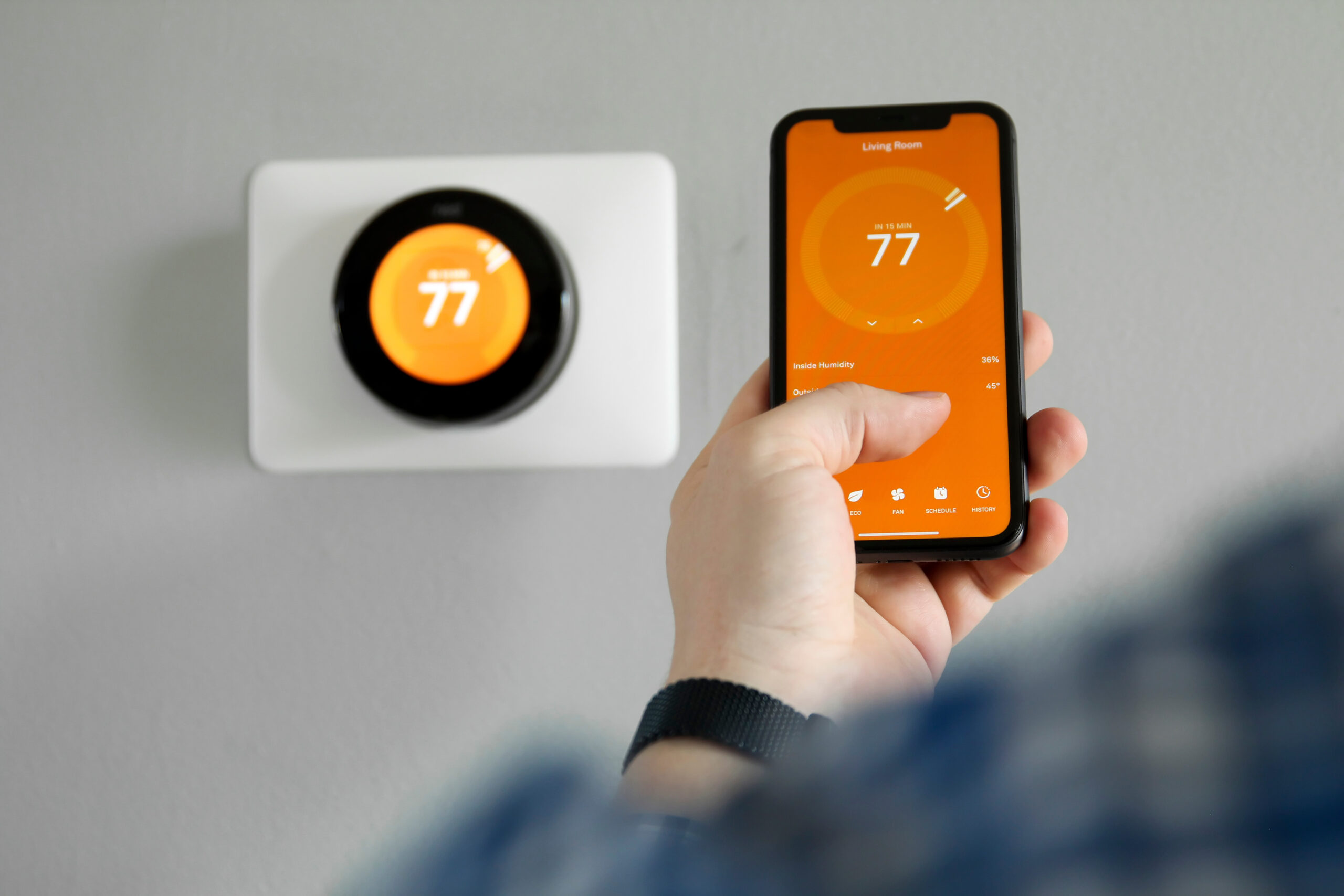
Smart thermostats represent the best of smart home technology. They’re widely available and well-loved for their user-friendly functions and money saving capabilities. In a time when home energy prices are increasing, smart thermostats can save homeowners energy and money while keeping the home at a comfortable temperature.
Learn how to use a smart thermostat and how to pick the best thermostat for your home.
What Is a Smart Thermostat?
Smart thermostats connect to WiFi and adjust home temperature settings automatically for optimal performance. Here’s how they differ from basic thermostats.
| Feature | Smart Thermostats | Basic Thermostats |
| Connectivity | Connect to WiFi and can be controlled via smartphone apps | No internet connection; adjusted manually or at the unit |
| Energy Savings | Save about 8% on heating and cooling bills on average and can pay for themselves over time | Savings depend entirely on user habits; no automatic optimization |
| Automation | Automatically adjusts temperature using schedules, motion sensors, or phone location; aided by smart home integration | No automation beyond simple scheduling on programmable models |
| Ease of Scheduling | App-based scheduling is easy to set up and adjust | Programming can be cumbersome; many users never fully use schedules |
| Learning Capabilities | Some models learn routines and create schedules automatically | No learning features |
| Energy Reports & Reminders | Provides usage reports, filter change reminders, and energy-saving suggestions | No reporting or maintenance reminders |
How Smart Thermostats Help You Save Energy
The smart thermostat energy savings come from a combination of smarter scheduling, setback temperatures, and occupancy detection. Simply put, smart thermostats turn off your HVAC more often than standard thermostats.
With advanced scheduling, smart thermostats recognize your daily routines and use that data to create standard heating/cooling schedules. Smart thermostats set setback temperatures that respond to the season and the household's habits. Using occupancy detection technology, these thermostats detect when no one is home and automatically adjust the temperature to save energy.
Smart thermostats also gather data on your household and deliver energy reports and usage insights that help you save money.
Key Features to Look For
These are the most important smart thermostat features to look for.
- WiFi Connectivity: Reliable, consistent WiFi connectivity is the most important feature and allows smart thermostats to perform their functions.
- App Control: Allows remote control from anywhere in the world, as well as easy-to-use settings control.
- Geofencing: Uses your phone’s location to adjust heating when you leave or return home.
- Learning Capabilities: Smart thermostats learn your daily routines and automatically create heating schedules that improve comfort and efficiency.
- Multi-stage System Support: Manages multiple heating and cooling levels, running at lower power for efficiency and comfort, and increasing to full capacity only when needed.
- Zoning Compatibility: Set different temperatures for different rooms, reducing wasted energy.
- Smart Home Compatibility: Works with popular smart home systems, enabling voice control and remote access to your heating, hot water, and more.
- Energy Usage Reports: Show how much energy you use, highlight waste, and compare your usage to similar households so you can make smarter decisions.
WiFi connectivity, a smart app, and learning capabilities are the needed features that make a smart thermostat truly ‘smart.’ For typical Indiana and Michigan homes that need to get through harsh winters and blazing summers, zoning compatibility and multi-stage system support are also needed.
Recommended Thermostat Settings for Comfort and Savings
These are the ideal recommended programmable thermostat settings that balance comfort and savings. The summer home temperature may be surprising to many homeowners, but a set daytime, in-home temperature of 78°F is best for energy savings and efficiency. That being said, the average daytime, in-home summer temperature for Americans is 71°F.
Homeowners should use a combination of the outside temperature, smart thermostat data, and household preferences to set their temperature.
| Best Thermostat Settings for Winter | Best Thermostat Settings for Summer | |
| Home | 68° F | 78°F |
| Away | 55-58° F | 85°F |
| Sleeping | 63-65° F | 71°F-82° F |
Common Smart Thermostat Mistakes to Avoid
Be wary of the following most common smart thermostat mistakes.
- Poor Thermostat Placement: Installing it on an exterior wall near sunlight, drafts, doors, or windows harms performance.
- Ignoring Software Updates: Smart thermostats rely on regular software updates to improve energy efficiency, fix issues, and enhance security. Failing to update may lead to a broken thermostat.
- Improper Self-Installing: Forgetting to connect the C-wire, connect to WiFi, or perform the initial recalibration can damage your smart thermostat and are easy mistakes for homeowners to make.
Most mistakes occur during initial installation and setup. That’s why professional smart thermostat installation is always recommended.
Is a Smart Thermostat Right for Your Home?
Smart thermostats don’t work with every HVAC system, so check the product details before buying, as some systems require specific manufacturers. Smart thermostats also typically use thin, low-voltage wires and often require a C-wire for constant power. Thicker, line-voltage wires may indicate incompatibility. While some homes without a C-wire can still use a smart thermostat, options may be limited or require an adapter.
Most smart thermostats also require a stable, reliable WiFi connection for full feature use. If your home lacks a compatible HVAC system, a proper electrical setup, or reliable WiFi, a smart thermostat may not be for you.
Why Install Your Smart Thermostat with Home Comfort Experts
Installing a smart thermostat is about more than mounting a device on the wall. Home Comfort Experts ensures proper wiring, correct configuration, and seamless integration with your HVAC system so you get the full range of WiFi thermostat benefits from day one. Professional installation helps prevent compatibility issues and inaccurate readings that can reduce efficiency.
Our team also walks you through setup, and if something ever goes wrong, you have reliable local support from a trusted provider of heating services and air conditioning services.
Upgrade Your Thermostat and Start Saving
Comfort, control, and long-term savings start with your new smart thermostat. Request a quote or schedule installation today with Home Comfort Experts.
Give us a call at (574) 319-7268 to learn more about our WiFi thermostat and comfort products.

