




Blog
Smart Thermostats vs. Programmable Thermostats: Which Saves More?
Maintaining a comfortable temperature in your home is crucial, especially in the extreme seasons of Indiana and Michigan. Summers get hot, winters are freezing, and energy bills can rise fast.
Upgrading your thermostat can help reduce energy consumption and maintain a consistent, efficient temperature year-round. But, which one will save you more money—smart or programmable thermostats?
At Home Comfort Experts, we install and service both. In this guide, we’ll break down the key differences between smart thermostats and programmable thermostats. Our experts explain how the thermostats work, what features they offer, and how each can help lower your energy bills so you can choose the best fit.
What Is a Programmable Thermostat?
A programmable thermostat lets you set a heating and cooling schedule based on your daily routine. Instead of adjusting the temperature manually every time you leave or go to bed, you can program the thermostat to do it for you.
Most models offer:
- 5-2 schedules, where weekdays and weekends follow different settings
- 7-day schedules, which let you customize each day of the week
This type of thermostat is great for people with predictable routines. For example, if your home is empty during work hours, you can set the system to use less energy while you’re gone. It will automatically return to a comfortable setting before you get home.
Programmable thermostats are more affordable than smart models, and many don’t require Wi-Fi. Pairing them with regular HVAC maintenance helps maximize performance and savings year-round.
These are a solid choice for homeowners who want to cut energy use without relying on high-tech features.
What Is a Smart Thermostat?
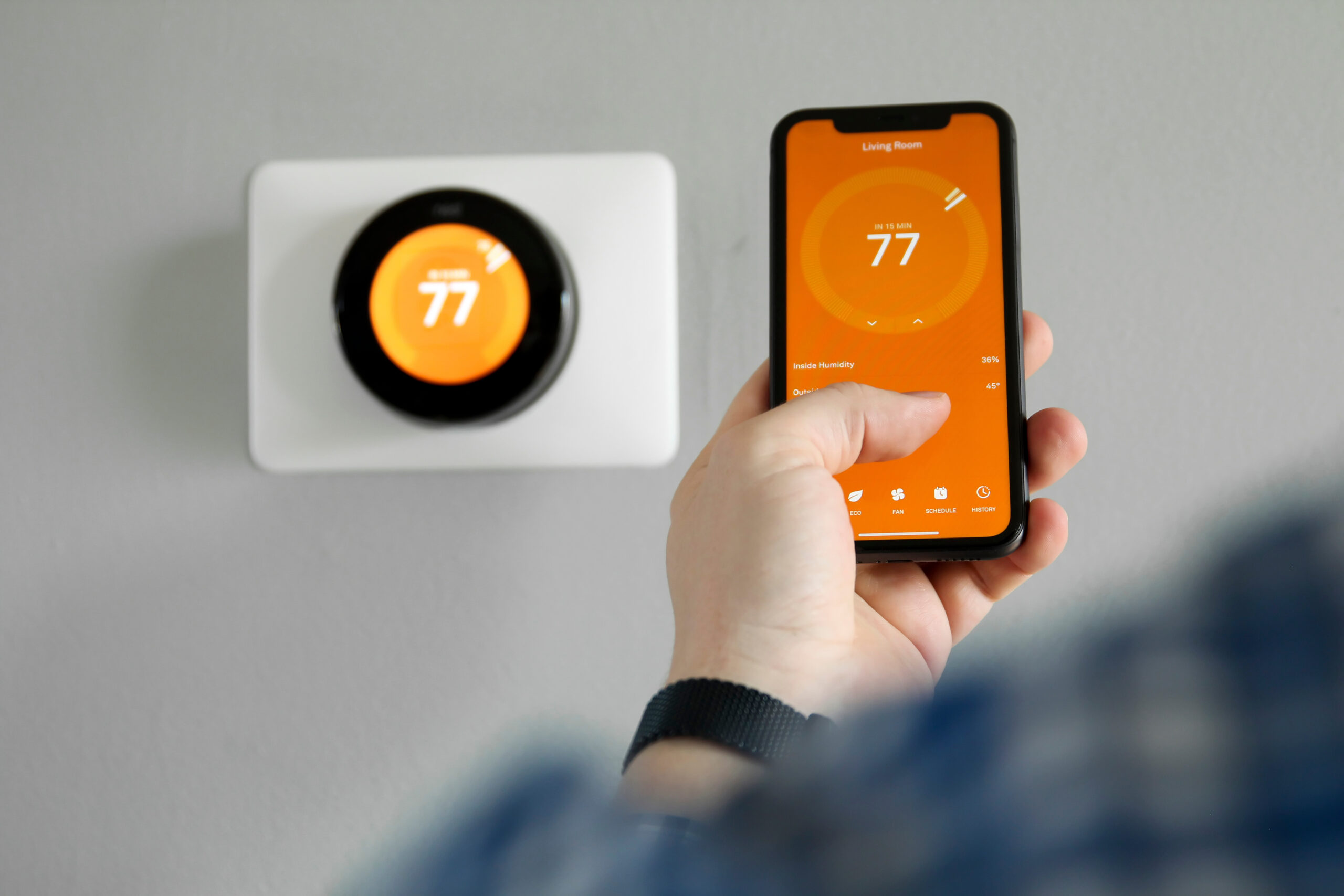
Smart thermostats are modern thermostats that connect to your home’s Wi-Fi. They allow you to control the temperature from your phone or tablet, and can connect with an existing smart home system, such as Alexa or Google.
One of the biggest advantages of smart thermostats is that they can learn your habits over time. For example, if you leave for work at 8 a.m. every day, a smart thermostat can adjust the temperature automatically without you having to lift a finger.
Many models also use geofencing. This means that your thermostat tracks your phone’s location and can adjust when you leave home to save energy. When you return, it brings your home back to a comfortable temperature.
Other common features include:
- Mobile app control for on-the-go adjustments
- Energy usage reports to track savings
- Automatic updates and system alerts
- Integration with other smart home devices
Smart thermostats are designed to make your home more efficient with less effort. They’re especially useful for busy families, tech-savvy users, and anyone who wants more control over their comfort and energy use.
Key Differences Between Smart and Programmable Thermostats
Smart thermostats and programmable thermostats both help manage your home’s energy use in different ways. Here’s how they compare when it comes to features, convenience, and savings.
Automation and Learning Capabilities
Programmable thermostats follow a set schedule that you create. Once it’s programmed, it repeats the same cycle unless you manually change it.
Smart thermostats learn from your behavior over time. They track when you're home or away and adjust settings automatically. Some even use motion sensors or geofencing based on your smartphone’s location. This learning technology helps reduce unnecessary heating and cooling, especially when no one is home.
Remote Access and Control
Most programmable thermostats don’t offer remote control. You need to be at home to make changes, unless you're using a model with limited Wi-Fi features.
Smart thermostats, on the other hand, connect to Wi-Fi and allow full control through mobile apps. Whether you’re at work, on vacation, or just on the couch, you can adjust the temperature from your phone or tablet.
Installation and Ease of Use
Both types of thermostats are relatively easy to install, especially for homeowners who are comfortable with basic wiring.
Programmable thermostats are usually more straightforward. Once installed, you just set your weekly schedule.
Smart thermostats often come with more features. A professional installation from Home Comfort Experts ensures everything is set up correctly.
Which Thermostat Type Saves More on Energy Bills?
Both smart and programmable thermostats help lower your energy costs. However, smart thermostats tend to save more over time.
Programmable thermostats reduce energy use by following a schedule you set. They turn down heating or cooling when you’re away or asleep.
Smart thermostats take this a step further. They learn your daily habits and adjust the temperature automatically. This smart automation often results in greater savings without manually adjusting the temperature settings.
Overall, while smart thermostats usually cost more upfront, they offer added convenience and efficiency. Programmable thermostats are more affordable but require you to update the schedule manually when your routine changes.
Pros and Cons of Smart Thermostats
Smart thermostats offer advanced features that can make managing your home’s temperature easier and more efficient. But like any technology, they come with advantages and drawbacks you should consider.
Pros of Smart Thermostats
The benefits of a smart thermostat include:
- Automatic temperature adjustments based on your routine
- Remote control through your smartphone
- Energy tracking and usage reports
- Integration with other smart home devices
- Less energy waste with minimal effort
Cons of Smart Thermostats
- Higher upfront cost than programmable models
- Requires Wi-Fi and a smartphone to access all features
- Setup can be confusing for some users
- Depends on the internet connection to function fully
Pros and Cons of Programmable Thermostats
Programmable thermostats are a popular, budget-friendly way to control your heating and cooling. Here’s a quick look at what makes them a good choice and where they might fall short.
Pros of Programmable Thermostats
- More affordable upfront cost
- Simple to use and program
- Don’t need Wi-Fi or apps
- Help reduce energy use when programmed correctly
Cons of Programmable Thermostats
- Need manual schedule updates when your routine changes
- No remote access or app control
- Less flexible, won’t learn or adjust automatically
Which Thermostat Is Right for Your Home?
Choosing the right thermostat depends on your budget, lifestyle, and how comfortable you are with technology. Both smart and programmable thermostats have their place in different homes.
If you prefer convenience and want to save the most energy without constant manual adjustments, a smart thermostat might be the best fit. They work well for busy families, tech-savvy users, and people who spend time away from home during the day.
On the other hand, if you have a regular schedule, want a simple solution, or prefer a lower upfront cost, choosing the best programmable thermostat can still provide solid savings and reliable comfort.
For snowbirds, retirees, or those who split time between homes, smart thermostats offer remote control and automation benefits. Families who are home more often may appreciate the straightforward programming of a programmable model.
When to Replace or Upgrade Your Thermostat
Knowing when to replace your thermostat can help avoid rising energy costs and keep your home comfortable and energy-efficient.
Here are common signs it might be time for an upgrade:
- Your indoor temperature feels uneven or fluctuates frequently.
- Your energy bills are rising without any other explanation.
- Your thermostat is old, outdated, or lacks modern features.
- You want better control with mobile access or smarter automation.
If your thermostat isn’t keeping up with your needs, upgrading to a newer smart or programmable model can improve comfort and save energy.
Need To Upgrade Your Thermostat? Here’s Why Home Comfort Experts Is the Best at It
Upgrading your thermostat is a smart investment in your home’s comfort and energy savings. At Home Comfort Experts, we bring years of experience installing both smart and programmable thermostats with precision and care.
Our team of skilled technicians understands the unique heating and cooling needs of homes in Indiana and Michigan. We guide you through selecting the right thermostat for your lifestyle and budget, ensuring your new system delivers optimal performance.
We also offer fast, professional service to get your new thermostat up and running without hassle. With a customer-first approach, we’re here to support you long after installation.
Book a Thermostat Service Today!
Call Home Comfort Experts To Schedule Your Thermostat Installation or Upgrade Today
Ready to save energy and take control of your home’s temperature? Contact Home Comfort Experts for expert thermostat installation and upgrade services across Northern Indiana and Southwest Michigan.
Whether you're looking for a smart thermostat with the latest features or a reliable programmable model, our team is here to help. We also provide comprehensive air conditioning services to ensure your entire system operates efficiently.
Better temperature control and lower energy bills are just a call away. Contact us today or book your appointment online to get started.
Frequently Asked Questions
Yes, most smart thermostats require Wi-Fi to connect to your phone and other devices. Without Wi-Fi, you will no longer be able to remotely control temperatures or use other advanced features.
Yes. Smart thermostats can be controlled from multiple smartphones, tablets, or computers as long as they’re connected to the same account.
If you’re comfortable with basic wiring and have the right tools, you can install a thermostat yourself. However, professional installation is recommended to ensure the system works correctly and safely.
Programmable thermostats are typically more affordable upfront, making them a budget-friendly option. Smart thermostats tend to cost more because of advanced features like Wi-Fi connectivity, app control, and learning capabilities.
The exact cost of a new thermostat upgrade depends on the model, features, and whether professional installation is included.
Installation usually takes 30 minutes to an hour, depending on the system and any additional setup needed.

